
Choosing a foundation repair company should involve more than comparing the lowest price. The right contractor should be able to explain what is causing the problem, recommend an appropriate repair, provide a clear estimate and give you enough information to make a confident decision.
Foundation problems can involve structural conditions, moisture, masonry, settlement and other issues that are not always obvious from the surface. Because the cost of an inappropriate repair can be much higher than the difference between two estimates, homeowners should evaluate the contractor as carefully as they evaluate the price.
Start With Relevant Foundation Repair Experience
Foundation repair is specialized work.
A contractor may have extensive general construction experience without necessarily having the same experience with foundation settlement, structural stabilization, basement masonry or foundation waterproofing.
Ask about experience with the type of problem affecting your property.
For example:
- Has the contractor repaired similar foundation cracks?
- Have they worked on settling foundations?
- Do they repair masonry foundations?
- Do they handle bowing walls?
- Do they work on older Boston-area homes?
- Can they address moisture issues when they are connected to foundation problems?
- Do they work on both residential and commercial properties if your project requires it?
The goal is not simply to find the contractor who has been in business the longest.
You want a contractor whose experience is relevant to the work you actually need.
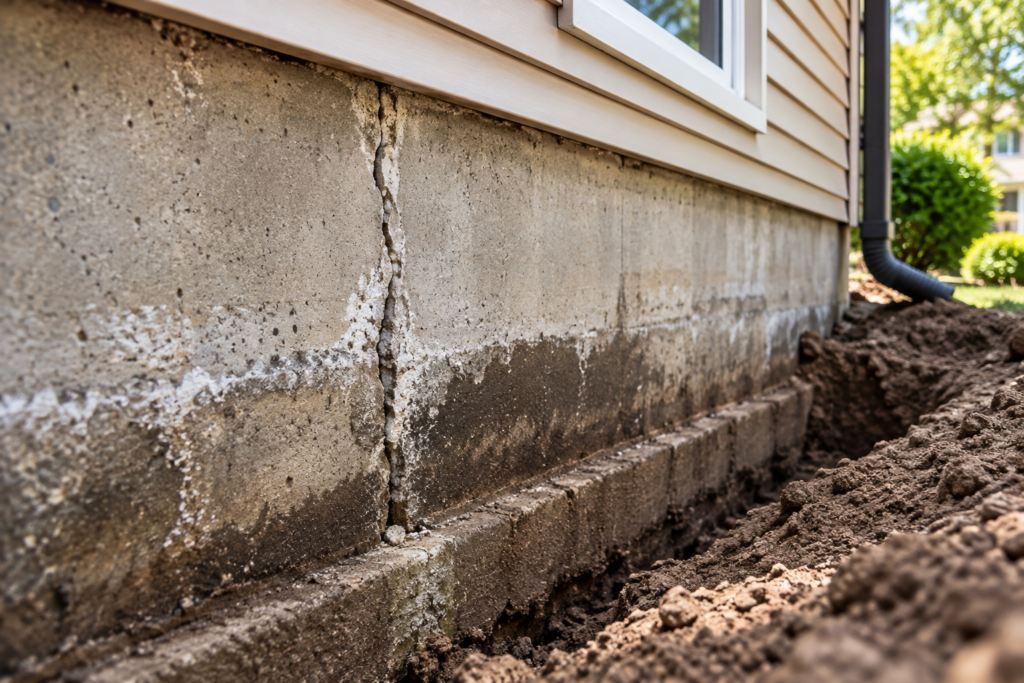
Look for a Contractor Who Explains the Cause
One of the most important parts of a foundation inspection is understanding why the problem exists.
A contractor who immediately recommends a repair without explaining the underlying condition may leave you with unanswered questions.
Suppose you have a basement crack.
Ask:
Why did this crack form?
The answer might involve settlement, moisture, masonry deterioration, movement or another condition.
The repair should make sense in relation to that diagnosis.
If the proposed repair only treats the visible symptom, ask whether anything else needs to be addressed.
This does not mean every foundation problem requires an expensive solution. In fact, understanding the cause can sometimes prevent unnecessary work.
Ask What Happens If You Wait
Foundation problems do not all progress at the same rate.
Some conditions may remain relatively stable for a long period. Others can worsen over time.
Ask the contractor:
- Is this urgent?
- What signs would indicate progression?
- What could happen if the repair is delayed?
- Is there evidence of active movement?
- Should water or drainage be addressed first?
- Is monitoring appropriate?
A trustworthy contractor should be willing to explain the level of concern rather than simply telling you that you need immediate work.
Urgency should be based on the condition of the property.
Compare Written Estimates
Once you have identified qualified contractors, get written estimates that clearly describe the work.
A useful estimate should identify:
- The problem
- Repair location
- Recommended method
- Major materials
- Labor or project scope
- Important exclusions
- Cleanup
- Restoration
- Warranty information
- Payment terms
- Potential conditions that could change the price
A final price without a clear scope is difficult to evaluate.
For a detailed explanation of what to compare, read [How to Compare Foundation Repair Estimates in Boston].
Do Not Choose a Contractor Based Only on the Lowest Bid
Price matters.
Foundation repair can be a substantial expense, and homeowners understandably want to control foundation repair costs.
But the lowest bid is not automatically the best value.
A contractor may submit a lower estimate because the proposed scope is smaller. Another may include additional work that is necessary to address the underlying condition.
Before selecting the lower bid, determine whether both contractors are actually proposing the same repair.
If the scope is comparable and one contractor is substantially less expensive, ask why.
There may be a legitimate reason.
The contractor may have easier access, lower overhead or a more efficient method.
The important thing is to understand the difference rather than assuming either contractor is wrong.
Verify Licensing, Insurance and Professional Credentials
Foundation repair involves structural work and can affect an important part of your property.
Before hiring a contractor, verify applicable licensing and insurance requirements for your project.
You can also ask the contractor directly about:
- Massachusetts licensing
- Liability insurance
- Workers’ compensation coverage
- Permits
- Inspections
- Subcontractors
- Warranty documentation
The exact requirements can depend on the type and location of the work.
If a contractor is reluctant to provide basic information about credentials or project documentation, consider that a warning sign.
Look at Reviews, References and Completed Work
Online reviews can be useful, but they should not be the only factor in your decision.
Look for patterns.
Are customers consistently commenting on:
- Communication?
- Punctuality?
- Quality of workmanship?
- Cleanliness?
- Whether the contractor explained the work?
- Whether the completed project matched expectations?
A handful of positive reviews is not enough to evaluate a major construction project.
You should also consider whether the contractor has completed projects similar to yours.
For example, a company with experience in residential remodeling may have excellent reviews but limited experience with structural foundation stabilization.
Relevant experience matters.
Ask About the Warranty
A warranty can be an important part of a foundation repair decision, but homeowners should read the actual terms.
Ask:
- What does the warranty cover?
- How long does it last?
- Does it cover labor?
- Does it cover materials?
- Are there exclusions?
- Is maintenance required?
- What happens if the property is sold?
- Is the warranty transferable?
A warranty is not a substitute for good workmanship, but it can help you understand what the contractor stands behind.
Do not compare warranties based solely on the number of years.
Read what the warranty actually covers.
Understand Who Will Perform the Work
Some contractors use employees, while others rely heavily on subcontractors.
Neither arrangement is automatically good or bad.
What matters is knowing who will perform the work and who is responsible for the completed project.
Ask:
Who will be on the job?
You can also ask who supervises the project and who you should contact if questions arise during construction.
Clear responsibility can make the project much easier to manage.
Be Careful With High-Pressure Sales
Foundation problems can make homeowners nervous.
A contractor may tell you that your house is in immediate danger and pressure you to sign a construction contract that day.
Sometimes urgent repairs really are necessary.
But a serious problem should still be explainable.
Ask the contractor to show you what they are seeing and explain why the work is urgent.
Be cautious if you are:
- Pressured to sign immediately
- Told an estimate is available only for a few hours
- Discouraged from getting another opinion
- Given vague explanations
- Offered a repair without an explanation of the cause
- Asked to make a large payment before understanding the scope
A major foundation project deserves careful consideration.
Questions to Ask Before Hiring a Foundation Repair Contractor
Bring a written list to every inspection.
Here are useful questions:
About the problem
- What do you believe is causing the problem?
- Is the condition structural?
- Is it getting worse?
- Is water contributing to it?
About the repair
- What repair are you recommending?
- Why is this method appropriate?
- Are there alternatives?
- What happens if I wait?
About the estimate
- What exactly is included?
- What is excluded?
- Can the price change?
- If additional work is needed, how will it be approved?
About the contractor
- Are you licensed and insured?
- Who will perform the work?
- How much experience do you have with this type of foundation?
- Can you provide relevant references?
About completion
- What does cleanup include?
- What restoration is included?
- What warranty is provided?
- What documentation will I receive?
A contractor who is willing to answer these questions clearly is giving you useful information for your decision.
Why Local Experience Can Matter in Boston
Boston properties are not all built the same.
Older homes, historic masonry, tight urban lots and changing weather conditions can create challenges that differ from those found in newer suburban construction.
Boston-area foundations can also encounter moisture and soil-related conditions associated with heavy rain, snow, freeze-thaw cycles and changing groundwater conditions.
Local experience does not guarantee that a contractor is right for every project.
But familiarity with the types of properties and conditions found in the area can be useful when evaluating a foundation problem.
Boston Foundation Repair: What Homeowners Should Expect
Boston Foundation Repair serves homeowners in Boston and provides foundation repair and related basement and masonry services.
The company states that it provides inspections and estimates so homeowners can discuss their property concerns and review potential repair options before beginning work.
Its dedicated Foundation Repair in Boston page provides information about the company’s foundation repair services.
For a homeowner evaluating a proposal, the most important question is not simply whether the contractor’s price is high or low.
It is whether the contractor has identified the right problem and proposed an appropriate solution at a reasonable price.
How to Make the Final Decision
After receiving your estimates, put the information side by side.
Start with the diagnosis.
Then compare the repair method.
Then compare the scope.
Then compare price.
Finally, consider the contractor’s experience, communication, documentation and warranty.
This order matters because it keeps price from becoming the only deciding factor.
A $5,000 repair that does not address the underlying problem is not necessarily a better value than a $10,000 repair that does.
At the same time, a $10,000 recommendation is not automatically justified simply because the contractor says the problem is serious.
The evidence and scope should support the price.
Frequently Asked Questions
What should I look for when choosing a foundation repair company?
Look for relevant experience, proper licensing and insurance, clear explanations, written estimates, appropriate repair recommendations, good communication and understandable warranty terms. The contractor should be able to explain why the recommended repair fits your property’s condition.
Should I always choose the foundation repair contractor with the lowest price?
No. Compare the scope of work before comparing the price. A lower bid may cover less work or use a different repair approach, so make sure you understand what each estimate includes.
How many foundation repair contractors should I contact?
For a significant project, comparing estimates from multiple qualified contractors can help you understand your options. The goal is not to collect as many bids as possible but to compare credible diagnoses and repair plans.