
Cambridge is known for its historic neighborhoods, iconic brick buildings, and homes that have stood for well over a century. While these structures showcase remarkable craftsmanship, many share one hidden challenge beneath the surface—Boston Blue Clay. This unique soil formation is one of the primary reasons foundation movement occurs throughout Cambridge and much of the greater Boston area.
Foundation repair in Cambridge, MA often requires a different approach than in many other parts of Massachusetts because many residential and commercial properties are built above this expansive clay layer. Unlike stable sandy or gravel-based soils, Boston Blue Clay changes its volume as moisture levels fluctuate throughout the year. Those repeated cycles of expansion and contraction place continual stress on foundations, leading to cracks, uneven settling, and structural movement if left unaddressed.
For homeowners, understanding why these issues occur is the first step toward protecting one of their most valuable investments. While visible cracks and uneven floors may appear to be isolated problems, they are often symptoms of deeper soil movement beneath the foundation. Identifying the underlying cause is essential because permanent repairs focus on stabilizing the structure—not simply covering up the visible damage.
Whether you own a historic Victorian, a classic Cambridge triple-decker, a brick townhouse near Harvard Square, or a newer commercial building, the behavior of the soil beneath your property plays a significant role in your foundation’s long-term performance. Knowing how Boston Blue Clay affects local structures can help you recognize warning signs early and make informed decisions before minor movement becomes a costly structural repair.
What is Boston Blue Clay?
Boston Blue Clay is a distinct glaciomarine sediment layer deposited during the late Pleistocene epoch throughout the Boston Basin, including much of Middlesex County. Thousands of years ago, retreating glaciers left behind a landscape that was submerged beneath ancient seawater. As the water gradually calmed, extremely fine clay particles settled to the bottom, eventually forming the dense marine clay now known as Boston Blue Clay.
From a geotechnical engineering perspective, Boston Blue Clay is notable because it is highly sensitive to changes in moisture content and possesses a high plasticity index—the range of moisture over which soil behaves plastically rather than remaining rigid. Unlike more granular soils that drain efficiently, this clay absorbs water slowly, retains moisture for long periods, and undergoes measurable volume changes as environmental conditions fluctuate. When saturated, the clay expands and softens. During prolonged dry periods, it contracts as moisture leaves the soil. These repeated shrink-swell cycles create continual movement beneath shallow foundations and are a leading contributor to differential settlement throughout the Cambridge area.
Although the soil may appear firm near the surface, its engineering properties become much more complex with depth. This is why foundation issues in Cambridge often require specialized structural solutions rather than conventional repairs.
Why Cambridge Homes Are Especially Vulnerable
Boston Blue Clay is found beneath many parts of Cambridge, particularly in lower-elevation areas influenced by historical marine deposits. Neighborhoods near the Charles River, Alewife, Fresh Pond, East Cambridge, and other formerly marshy or filled areas commonly contain significant deposits of this clay beneath residential and commercial developments.
One characteristic that often surprises homeowners is that the upper portion of the clay layer is typically much stiffer than the material below it. Over hundreds of years, exposure to seasonal weather has caused the upper few feet to dry and consolidate through a natural process known as desiccation. This creates the appearance of stable ground, but beneath that stiff crust lies a much deeper matrix of softer, more compressible clay with significantly lower shear strength.
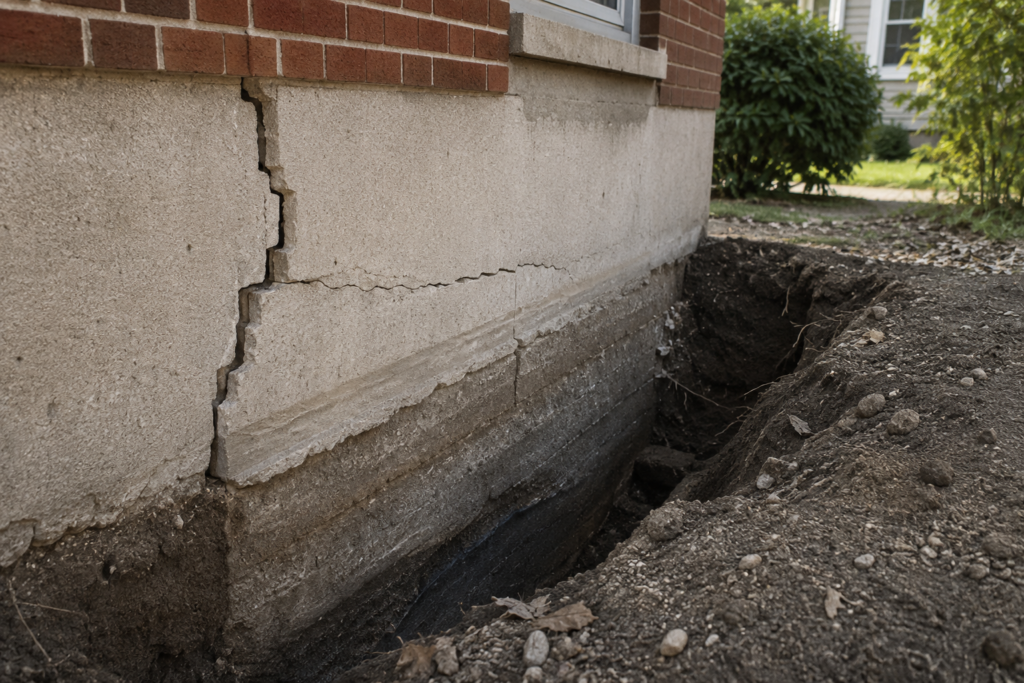
As homes, apartment buildings, and commercial structures place continuous weight on this underlying layer, the softer clay slowly compresses over time. Seasonal moisture changes can accelerate this movement, especially when different areas beneath the same foundation experience different moisture conditions.
Many of Cambridge’s older homes were constructed long before modern geotechnical investigations became standard practice. Historic Victorians, Colonial homes, brick row houses, and triple-deckers often rely on shallow foundation systems that were appropriate for the construction practices of their era but remain vulnerable to long-term soil movement. As these buildings continue to age, the interaction between their foundations and Boston Blue Clay becomes increasingly important.
This is one reason foundation repair in Cambridge, MA frequently requires more than simply repairing visible cracks. A thorough structural evaluation focuses on determining whether movement originates from the active clay layer beneath the building, allowing engineers and foundation specialists to recommend a permanent solution rather than a temporary cosmetic repair.
How Soil Desiccation and Swelling Cause Differential Settlement
The greatest challenge posed by Boston Blue Clay is not that it moves once—it moves repeatedly throughout the life of a structure.
New England’s climate naturally creates ongoing cycles of drying and saturation that continually affect the clay beneath Cambridge homes. During the summer months, extended periods of warm weather increase evaporation from the soil surface. Mature trees, shrubs, and extensive root systems common throughout Cambridge neighborhoods further reduce moisture levels by drawing water from the surrounding ground. As moisture leaves the clay, soil desiccation occurs. The clay particles contract, causing the soil to shrink and lose volume. Even relatively small changes in soil volume can reduce support beneath portions of a foundation.
When autumn arrives, followed by winter snow accumulation and spring snowmelt, the process reverses. Rainfall, melting ice, and saturated ground allow the clay to absorb moisture once again. As water enters the soil, the clay expands, increasing in volume and altering the pressures acting beneath shallow footings. Instead of remaining stable year after year, the active clay layer is constantly responding to seasonal environmental conditions.
These shrink-swell cycles alone can create foundation movement, but the problem becomes even more significant because moisture rarely changes uniformly beneath an entire structure. The south-facing side of a home may dry more quickly due to increased sunlight, while shaded areas remain damp. Downspouts may discharge excess water along one wall, while large mature trees remove moisture from another corner of the property. Each of these conditions changes the behavior of the clay beneath different sections of the foundation.
Over time, these uneven moisture conditions create the conditions necessary for differential settlement—one of the most common causes of structural foundation damage in Cambridge. Instead of the entire building rising or settling evenly, different portions of the foundation move independently. One corner may gradually sink while another remains stable, or one wall may experience greater seasonal movement than the rest of the structure.
As differential settlement progresses, the stresses are transferred throughout the building’s structural system. Foundation walls, floor framing, masonry, drywall, doors, windows, and roof connections all respond to these changing loads. What begins as subtle soil movement beneath the foundation can eventually develop into visible structural symptoms throughout the home.
Understanding this relationship between Boston Blue Clay and differential settlement explains why simply patching cracks rarely provides a lasting solution. Successful foundation repair in Cambridge, MA begins by identifying the underlying soil conditions and addressing the source of movement rather than only repairing its visible effects.
Key Signs Your Cambridge Home is Shifting on Blue Clay
Foundation movement caused by Boston Blue Clay rarely happens overnight. Instead, it develops gradually as seasonal moisture changes repeatedly cause the soil beneath your home to expand, contract, and settle. Because many Cambridge homes are decades—or even centuries—old, it can be difficult to tell whether a crack or uneven floor is simply the result of age or an indication of a more serious structural issue.
Recognizing the difference is important. Cosmetic imperfections generally remain unchanged over time, while foundation-related damage tends to become progressively worse as the underlying soil continues to move. If you’ve noticed multiple symptoms appearing at the same time, it’s worth having your home’s foundation professionally evaluated before the damage spreads.
Common warning signs of differential settlement include:
- Stair-step cracks in brick or masonry walls. These zigzag cracks often indicate that one section of the foundation is moving independently from another.
- Diagonal drywall cracks extending from the corners of doors and windows. As the structure shifts, stress naturally concentrates around these framed openings.
- Doors that suddenly stick, rub against the frame, or refuse to latch properly. Even minor foundation movement can slightly twist the framing of your home, making doors difficult to operate.
- Windows that become difficult to open or close. Foundation settlement can distort window openings, creating resistance where none existed before.
- Sloping or uneven floors. Older Cambridge homes, particularly historic multi-family properties and triple-deckers, may develop noticeable floor slopes as support beneath one area of the structure settles.
- Gaps between walls, ceilings, or trim. As structural components move, visible separations may appear where materials were once tightly connected.
- Foundation wall cracks that continue to widen over time. Cracks that grow from season to season often suggest active movement rather than normal concrete curing.
Basements can also reveal early warning signs. Water seepage through foundation walls, recurring damp spots, widening wall cracks, or minor wall displacement may indicate that soil movement and hydrostatic pressure are working together to place additional stress on the structure. While waterproofing can help control moisture intrusion, it is equally important to determine whether the underlying foundation itself is moving.
Cosmetic Cracks vs. Structural Foundation Movement
Not every crack is cause for alarm, but understanding the difference can save homeowners from overlooking a developing structural problem.
Hairline cracks that appear shortly after concrete is poured are often the result of normal curing and shrinkage. These cosmetic cracks typically remain narrow, show little change over time, and generally do not affect the structural integrity of the foundation.
Structural settlement behaves differently. Cracks caused by Boston Blue Clay tend to widen gradually, reappear after being repaired, or occur alongside other symptoms such as sticking doors, uneven floors, or shifting masonry. These patterns indicate that the soil beneath the foundation is still moving. Simply filling the crack may improve its appearance or temporarily reduce water intrusion, but it does not address the underlying differential settlement responsible for the damage.
If several warning signs appear together, scheduling a professional inspection is the safest way to determine whether structural movement is occurring before more extensive repairs become necessary.
| Soil Metric / Property | Behavior Under Foundation | Structural Risk | Correct Remediation |
| High Plasticity Index | Retains high water volume and expands heavily when wet. | Upward heave on shallow footings. | Deep piering below frost and active soil zones. |
| Desiccation (Drying) | Shrinks drastically during droughts or near tree roots. | Downward differential settlement. | Controlled perimeter hydration and deep foundation piles. |
| Low Shear Strength | Yields under localized, heavy structural weights. | Foundation sinking, wall rotation, and cracking. | Heavy-gauge steel push piers installed to load-bearing glacial till. |
The Engineering Solution: Bypassing the Clay Matrix
Once differential settlement has begun, many homeowners naturally look for the quickest and least expensive repair option. Unfortunately, shallow repairs often provide only temporary relief because they fail to eliminate the real source of the problem—the unstable Boston Blue Clay beneath the foundation.
Traditional methods such as adding concrete beneath a settling footing, patching visible cracks, or filling voids around the foundation may temporarily improve appearance or provide limited stabilization. However, the structure is still relying on the same moisture-sensitive clay layer for support. As seasonal shrink-swell cycles continue, the soil beneath those repairs remains active, allowing settlement to resume over time.
Similarly, foundation crack repair is an important part of protecting a home from water intrusion, but sealing cracks alone cannot stop ongoing structural movement if the foundation continues to shift. Unless the underlying soil instability is addressed, new cracks may eventually develop even after previous repairs have been completed.
This is why professional foundation repair begins with identifying the cause of movement rather than simply treating its visible symptoms. Experienced contractors evaluate soil conditions, foundation type, structural loads, drainage patterns, and moisture influences before recommending an engineered repair plan.
For many Cambridge homes, especially older properties constructed over deep deposits of Boston Blue Clay, permanent stabilization requires transferring the building’s weight beyond the active clay layer and onto stronger bearing material below.
Helical Piers and Resistance Piers: Reaching Stable Ground
Modern foundation repair relies on engineered deep foundation systems that bypass unstable soil instead of attempting to strengthen it.
Two of the most common solutions are helical piers and steel resistance (push) piers. Although each system is installed differently, both are designed to accomplish the same goal: transfer the structural load from moisture-sensitive Boston Blue Clay to stable glacial till or bedrock located much deeper beneath the surface.
Helical piers feature large steel shafts fitted with spiral plates that allow them to be screwed into the ground with specialized hydraulic equipment. Because installation torque can be carefully monitored, contractors can verify that the piers have reached soil capable of supporting the structure before the foundation is permanently stabilized.
Steel resistance piers, often called push piers, use the weight of the building itself to hydraulically drive heavy-duty steel sections downward through the weak clay layer until they reach competent load-bearing strata. Once installed, hydraulic jacks gradually transfer the building’s weight onto the new support system, reducing or stopping further settlement.
Depending on the structure and degree of movement, foundation specialists may also incorporate foundation jacking and leveling to carefully lift settled sections of the building before permanently securing them on the new deep foundation system. This controlled lifting process helps restore structural alignment while minimizing additional stress on the home.
Unlike shallow repair methods, deep foundation systems are specifically engineered to bypass the active shrink-swell zone that causes most settlement problems in Cambridge. By anchoring into stable ground below the Boston Blue Clay, these systems provide significantly greater long-term reliability for both residential and commercial properties.
This specialized deep-foundation method is the core component of permanent structural foundation repair in Cambridge, MA, ensuring the building’s weight is transferred to stable strata.
Whether the project involves helical pier installation, steel push piers, structural lifting, or foundation stabilization, every successful repair begins with understanding the unique geotechnical conditions beneath the property. Rather than treating only the visible damage, engineered foundation repair addresses the root cause of settlement, providing homeowners with a durable solution designed to perform for decades under Cambridge’s challenging soil conditions.
Protecting Your Foundation: Local Moisture Management
While Boston Blue Clay cannot be removed from beneath your property, homeowners can take practical steps to reduce the amount of seasonal soil movement surrounding their foundation. The goal isn’t to keep the soil completely dry or constantly wet—it’s to maintain as consistent a moisture level as possible throughout the year.
Rapid fluctuations in soil moisture create the greatest amount of movement within expansive clay soils. By managing drainage and controlling how water enters and leaves your property, you can help minimize the shrink-swell cycles that contribute to differential settlement.
Here are several preventative measures that can make a significant difference:
- Extend gutter downspouts at least 5–10 feet away from the foundation. Roof runoff discharged directly beside the home can quickly saturate Boston Blue Clay and increase expansion beneath shallow footings.
- Maintain positive grading around the property. The surrounding landscape should gently slope away from the foundation so rainwater naturally drains away instead of pooling against foundation walls.
- Keep gutters and drainage systems clean. Clogged gutters can overflow during heavy storms, depositing large volumes of water exactly where it should be avoided.
- Avoid excessive watering near the foundation. Landscape irrigation should be directed away from the home’s perimeter whenever possible to prevent unnecessary soil saturation.
- Monitor mature trees growing close to the structure. Large root systems can remove substantial amounts of moisture during hot summer months, causing localized soil desiccation beneath one portion of the foundation while other areas remain relatively stable.
- Repair plumbing leaks promptly. Even slow underground leaks can keep portions of the clay continuously saturated, creating uneven soil conditions beneath the structure.
- Inspect your basement regularly. Damp walls, recurring moisture, or new cracks may indicate drainage issues that should be addressed before they contribute to additional structural movement.
These maintenance practices cannot reverse existing foundation settlement, but they can reduce future soil movement and help protect your investment. When combined with professionally engineered repairs, effective moisture management plays an important role in preserving the long-term stability of homes throughout Cambridge.
Frequently Asked Question
Does every home in Cambridge sit on Boston Blue Clay?
No. While Boston Blue Clay is common throughout much of Cambridge—particularly in neighborhoods near the Charles River, Alewife, Fresh Pond, East Cambridge, and other low-lying areas—not every property has identical subsurface conditions. Soil depth, composition, historical land fill, and previous site development can vary considerably from one lot to the next.
Because soil conditions cannot be determined simply by looking at the surface, a professional structural inspection is often the best way to determine whether Boston Blue Clay is contributing to foundation settlement. When necessary, additional geotechnical investigation can provide valuable information about the soil profile beneath a structure and help guide the most effective long-term repair solution.
Conclusion & Next Steps
Cambridge’s beautiful historic homes, classic brick buildings, and modern commercial properties all have one thing in common—they depend on the strength and stability of the ground beneath them. When that ground consists of moisture-sensitive Boston Blue Clay, even small seasonal changes can gradually lead to differential settlement, foundation cracks, uneven floors, sticking doors, and other structural problems.
The good news is that these issues can often be permanently corrected when the underlying cause is properly identified. Rather than relying on temporary cosmetic repairs, modern foundation engineering focuses on transferring the building’s weight beyond the active clay layer using proven deep foundation systems such as helical piers and steel resistance piers. By supporting the structure on stable glacial till or bedrock, these engineered solutions are designed to provide lasting structural stability even under Cambridge’s challenging soil conditions.
At Boston Foundation Repair, every project begins with understanding why the foundation is moving—not simply repairing the symptoms. Our experienced team evaluates structural conditions, drainage patterns, and local soil characteristics before recommending a repair plan tailored to your property. Whether you’re dealing with foundation cracks, uneven floors, basement moisture, or ongoing settlement, we’ll help you identify the right solution with honest recommendations and quality workmanship.
If you’ve noticed stair-step cracks, sticking doors, sloping floors, widening foundation cracks, or other warning signs of structural movement, don’t wait for the damage to become more extensive. Scheduling a professional inspection today can help prevent more costly repairs tomorrow.