
Foundation repair costs in Boston vary widely because the price depends on what is wrong, how extensive the damage is, how accessible the foundation is and what repair method is appropriate. The best way to understand the cost of your project is to have the underlying problem evaluated and receive a detailed estimate that explains exactly what work is being recommended.
If you are trying to decide whether a foundation repair estimate is reasonable, do not focus only on the final dollar amount. Two contractors can give very different prices because they may be recommending different solutions, addressing different causes or including different amounts of work.
What Determines Foundation Repair Cost in Boston?
There is no single price that applies to every foundation repair project. Boston has a wide range of residential properties, from newer construction to older homes with masonry foundations, stone foundations, brick foundations and other construction methods. The condition and construction of the property can make a significant difference in both the work required and the final price.
Several factors usually influence the cost of a foundation repair project.
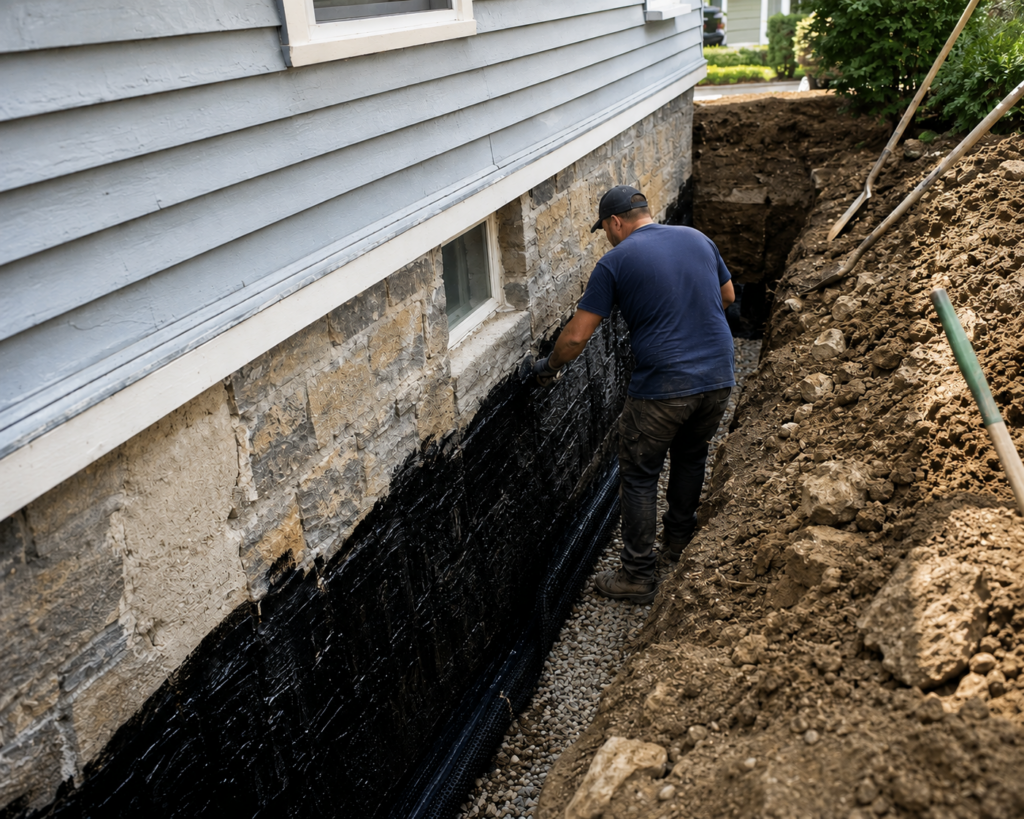
The Type of Foundation Problem
A small crack that is not causing structural movement can require a very different repair from a foundation wall that is bowing, settling or shifting.
Possible problems include:
- Foundation cracks
- Foundation settlement
- Bowing or leaning walls
- Deteriorating masonry
- Water entering through foundation walls
- Uneven floors
- Foundation movement
- Damaged or failing mortar
- Problems caused by drainage or moisture
- Structural movement around additions or older portions of a home
The visible symptom is not always the actual problem.
For example, a homeowner may see a crack in a basement wall and assume the crack itself needs to be sealed. In some situations, however, the crack may be related to movement, water pressure or another condition that needs to be addressed first.
That is why a useful estimate should explain the cause of the problem rather than simply assigning a price to the visible damage.
The Repair Method
The repair method is another major factor.
Depending on the situation, foundation work can involve crack repair, structural reinforcement, wall stabilization, pier installation, underpinning, masonry repair or other corrective measures.
A repair that involves localized work may cost substantially less than a project requiring structural stabilization across a larger section of the foundation.
This is one reason it is difficult to use an online “average foundation repair cost” as a substitute for an actual evaluation.
A homeowner with a small, localized problem should not assume they need the same system as a homeowner dealing with significant settlement. At the same time, a homeowner with obvious structural movement should be cautious about choosing a contractor solely because the contractor offered the lowest initial price.
The Size of the Area Being Repaired
The amount of foundation that requires attention matters.
Repairing one limited section of a wall is different from repairing an entire foundation wall. Larger areas may require more labor, materials, excavation, stabilization equipment or finishing work.
When comparing estimates, check whether each contractor is proposing work over the same area.
One estimate may cover a single section while another may include adjacent areas that the contractor believes are contributing to the problem. The two numbers may therefore look dramatically different even though both contractors are acting in good faith.
Accessibility
Foundation work is often affected by how easily the crew can reach the problem area.
A basement with clear access can be easier to work in than a cramped crawl space. Exterior work can also become more complicated when landscaping, decks, patios, additions, utility lines or other structures are located near the foundation.
Older Boston properties can present additional challenges because previous renovations, tight lots and existing construction may limit access.
A good estimate should account for the actual conditions at the property instead of assuming the project can be performed under ideal circumstances.
Moisture and Drainage Conditions
Water can be an important part of a foundation problem.
Boston-area homes experience heavy rain, snow and seasonal freeze-thaw conditions. Water can enter through foundation cracks, masonry joints and other openings, while drainage problems can increase pressure against foundation walls.
If water is contributing to the problem, repairing the visible crack without addressing the source may not solve the larger issue.
That can mean the appropriate project includes some combination of foundation repair, drainage improvements or basement waterproofing.
Why Older Boston Homes Can Have Different Repair Costs
Boston has many older homes and buildings, and older construction can require a different approach from newer construction.
A foundation made from older brick, stone or masonry may have different repair requirements from a modern poured-concrete foundation. Mortar may have deteriorated over decades. Previous repairs may also have changed how portions of the foundation behave.
Historic properties can require additional care because structural repairs may need to preserve existing materials and architectural details.
This does not automatically mean that an older home will cost more to repair. It means the contractor needs to understand what is actually there before recommending a solution.
For example, replacing a section of deteriorated masonry may be appropriate in one situation, while stabilizing a moving foundation may be necessary in another.
The age of the house is therefore useful context, but it should not be used as the sole basis for estimating cost.
Does a Foundation Crack Always Mean an Expensive Repair?
No. A foundation crack does not automatically mean that a major structural repair is required.
Some cracks are relatively minor. Others can indicate movement, water intrusion or a larger structural concern.
The important questions include:
- Where is the crack?
- Is it horizontal, vertical or stair-step?
- Is it getting larger?
- Does it allow water into the basement?
- Is the surrounding wall moving?
- Are there other signs of settlement?
- Are floors uneven?
- Are doors or windows sticking?
- Are there cracks elsewhere in the home?
A small vertical crack in an otherwise stable wall is a different situation from a large horizontal crack accompanied by bowing or other signs of movement.
Homeowners should therefore avoid assuming that the size of a crack alone determines the cost.
How to Compare Foundation Repair Estimates
Once you have received estimates, compare the scope of work rather than just the total.
A useful estimate should make it reasonably clear:
What problem is being repaired?
The contractor should explain what they believe is causing the problem.
What work will be performed?
Look for a description of the repair itself, including the affected area and general method.
What materials or systems are included?
The estimate should identify significant materials or structural components where appropriate.
Are related problems included?
If water, drainage or masonry deterioration is part of the problem, determine whether those issues are included or excluded.
What preparation and cleanup are included?
Foundation work can involve demolition, excavation or other preparation. Ask what happens to the area when the project is complete.
What is not included?
Exclusions can be just as important as inclusions.
For example, an estimate may cover foundation stabilization but not landscaping restoration after exterior excavation. Knowing this beforehand makes the comparison much more useful.
For a deeper guide to comparing proposals, see [How to Compare Foundation Repair Estimates in Boston].
How to Tell if a Foundation Repair Price Is Fair
A fair price is not necessarily the cheapest price.
A better question is whether the price is reasonable for the specific scope of work being proposed.
Suppose Contractor A quotes $8,000 and Contractor B quotes $14,000. It would be tempting to assume Contractor A is offering the better deal.
But what if Contractor A is only sealing several cracks while Contractor B is recommending structural stabilization because the wall is moving?
Those are not equivalent proposals.
On the other hand, a much higher price does not automatically mean the more expensive contractor is correct. The recommendation should be supported by the property’s actual condition.
Look for an estimate that:
- Identifies the problem clearly.
- Explains the recommended repair.
- Specifies the area being addressed.
- Describes important materials or systems.
- Identifies exclusions.
- Gives you an opportunity to ask questions.
- Does not pressure you into making an immediate decision.
If you are unsure about a proposal, ask the contractor to walk you through it line by line.
When Getting Multiple Estimates Makes Sense
Foundation repair is a significant property expense, so comparing estimates can be useful.
Multiple estimates can help you understand:
- Whether contractors agree about the cause.
- Whether the proposed repair methods are similar.
- Whether one contractor is including additional work.
- Whether there are significant exclusions.
- Whether the price is consistent with the scope.
However, collecting estimates is most useful when you compare like with like.
If three contractors recommend three completely different solutions, the next question should not simply be, “Which one is cheapest?”
Instead, ask why the recommendations differ.
A contractor should be able to explain why the proposed method fits the condition of your foundation.
Why the Cheapest Foundation Repair Estimate May Not Be the Best Value
Foundation repair is one area where cutting the initial price can sometimes create additional costs later.
A low estimate may be legitimate. It may reflect a smaller scope, efficient access or a simpler repair.
But homeowners should understand exactly what they are purchasing.
If the estimate does not address the underlying cause, the repair may not resolve the larger problem. If important work is excluded, the final cost can also become higher than the initial quote.
The goal should be appropriate repair at a reasonable price, not simply the lowest number on the page.
Getting a Foundation Repair Estimate in Boston
The first step is identifying what is actually happening at your property.
Boston Foundation Repair provides foundation repair services in Boston and offers inspections and estimates so homeowners can discuss the condition of their property before deciding what work is appropriate.
The company’s dedicated Foundation Repair in Boston, MA service page explains the types of foundation problems it addresses, including cracks and structural concerns.
For homeowners comparing costs, the most useful information is not an online average. It is a clear explanation of the specific problem, the recommended repair and what the quoted price includes.
Frequently Asked Questions
How much does foundation repair cost in Boston?
There is no single price because foundation repair projects vary by problem, repair method, size, accessibility, materials and site conditions. A professional inspection and detailed estimate are the most reliable way to determine the expected cost for a specific property.
Is the cheapest foundation repair estimate the best?
Not necessarily. Compare the scope of work, repair method, materials, exclusions and explanation of the underlying problem before deciding which estimate provides the best value.
Should I get more than one foundation repair estimate?
For a significant foundation project, getting multiple estimates can help you compare proposed solutions and pricing. Make sure you compare estimates based on the same scope rather than simply choosing the lowest total.