
Finding a crack in your foundation can immediately raise an uncomfortable question: Do I actually need foundation repair, or am I looking at a normal part of an aging home? The answer depends on the type of crack, whether it is changing, what other symptoms are present and what a professional inspection finds.
Not every foundation crack requires major structural work, but changing cracks, wall movement, uneven floors, recurring water intrusion and multiple related symptoms deserve closer attention. Before hiring a contractor, the most important step is determining what is actually happening and whether the recommended repair addresses the underlying condition.
This distinction is important because foundation repair is not one universal solution.
A narrow crack may require a very different response from a bowing foundation wall. A damp basement may require drainage or waterproofing rather than structural stabilization. Deteriorated mortar may require masonry repair, while movement behind the masonry could require a more involved structural solution.
Cambridge homeowners should therefore avoid making a repair decision based solely on the appearance of one crack.
Instead, look at the larger pattern.
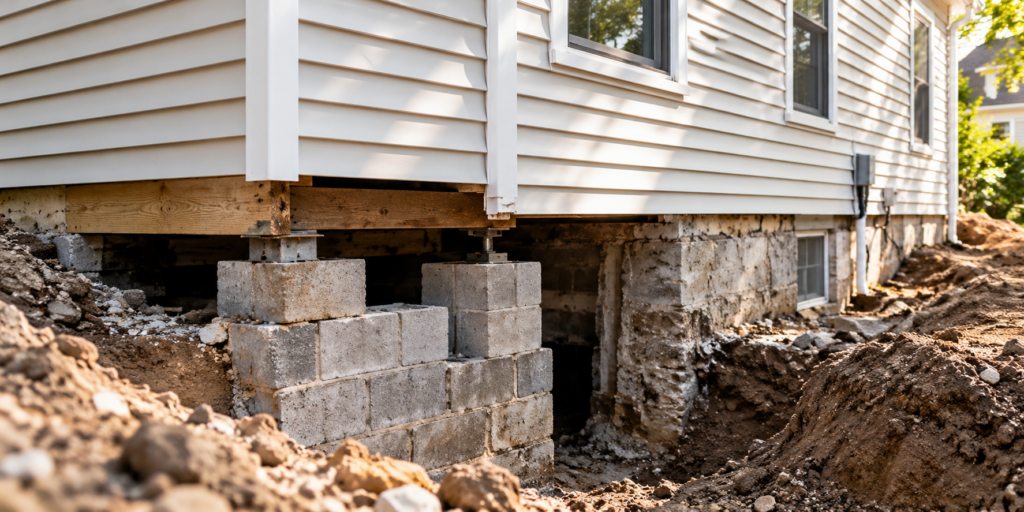
1. Start With the Foundation Cracks You Can See
Foundation cracks are one of the most common reasons homeowners seek an inspection.
But the location and pattern of a crack matter.
Vertical cracks
Vertical cracks in poured concrete can sometimes be associated with concrete shrinkage or other relatively minor conditions.
That does not mean every vertical crack can be ignored.
Ask:
- Is it new?
- Has it changed?
- Is it widening?
- Is water entering?
- Are there other cracks nearby?
- Is the wall moving?
- Are there other symptoms inside the house?
A stable, narrow crack may have a different significance from a crack that is widening over time.
Horizontal cracks
Horizontal cracks deserve particular attention because they can be associated with pressure against a foundation wall.
Surrounding soil and moisture conditions can place pressure on basement walls.
If a horizontal crack is accompanied by bowing, displacement or water intrusion, a professional evaluation is especially important.
Stair-step cracks
Stair-step cracking commonly appears along masonry joints.
It can occur for several reasons, including movement or settlement.
The crack should be considered alongside the condition of the surrounding wall.
A contractor should evaluate whether the masonry is simply deteriorating or whether the pattern suggests movement.
2. Look for Signs Inside the Home
Foundation movement does not always announce itself with a dramatic basement crack.
Sometimes homeowners first notice changes in the living areas.
Possible warning signs include:
- Doors that suddenly stick
- Windows that become difficult to open
- Uneven floors
- Sloping floors
- Cracks above doors
- Cracks around window frames
- Gaps between walls and ceilings
- Separation around trim
- New drywall cracks
- Changes that appear to be getting worse
These signs do not automatically mean the foundation is failing.
Buildings experience normal movement, and materials respond to temperature and moisture.
But when several symptoms occur together, they deserve more attention.
For example, a homeowner might notice a new basement crack at the same time that a bedroom door begins sticking.
Either symptom alone might have a simple explanation.
Together, they provide more reason to have the property evaluated.
3. Pay Attention to Water and Basement Moisture
Water problems are another major reason homeowners contact foundation and basement contractors.
Water may appear after heavy rain, during periods of high groundwater or because of drainage conditions around the property.
Watch for:
- Wet foundation walls
- Water stains
- Damp basement floors
- Efflorescence
- Musty odors
- Recurring puddles
- Peeling coatings
- Mold or mildew concerns
- Water entering through cracks
- Water collecting near the foundation
A water problem does not necessarily mean that the foundation is structurally failing.
However, recurring water should have a source identified.
Waterproofing is not always the same as foundation repair
A contractor may recommend waterproofing, drainage improvements or a sump pump if the primary issue is water management. Boston Foundation Repair’s Cambridge services include basement waterproofing and drainage, sump pump installation and repair, and foundation-related structural services.
This distinction matters because sealing one visible location may not solve a larger drainage problem.
The correct approach should depend on where the water is coming from and how it is reaching the basement.
4. Consider the Age and Construction of the Property
Cambridge contains a wide variety of homes and buildings.
Some properties are relatively modern, while others have much older construction.
Foundation materials can vary, too.
You may encounter:
- Poured concrete
- Concrete block
- Brick
- Stone
- Granite
- Mixed masonry
- Previously repaired foundations
The material affects how a contractor should approach the inspection.
Older masonry requires careful evaluation
Older brick or stone foundations may have deteriorated mortar, damaged masonry or previous repairs.
A contractor should distinguish between:
Masonry deterioration and structural movement.
Those are not automatically the same thing.
Boston Foundation Repair’s Cambridge masonry service describes work involving brick, stone and concrete, including brick repair, repointing and cinder block foundation repairs.
If your foundation is masonry, ask the contractor whether the recommended work is primarily restoration, waterproofing, structural stabilization or some combination.
5. Know When an Inspection Makes Sense
You do not need to wait until a foundation problem looks severe before asking for an evaluation.
An inspection can be useful when:
- A crack is changing
- New cracks are appearing
- Water is repeatedly entering
- A wall appears to bow
- Floors are becoming uneven
- Doors or windows suddenly stick
- Masonry is deteriorating
- You see evidence of settlement
- Previous repairs appear to be failing
Boston Foundation Repair’s Cambridge page states that it provides foundation inspections and assessments.
The purpose of an inspection should not be to convince you to buy a particular repair.
It should help you understand the condition of the property.
Ask the inspector to explain the findings
After the inspection, ask:
“What did you find?”
Then:
“What makes you believe that is the cause?”
And finally:
“What happens if I do nothing right now?”
These questions can help you distinguish a problem that needs prompt action from one that may simply require monitoring.
6. Understand the Difference Between Repair Types
The phrase “foundation repair” covers several different types of work.
Crack repair
A contractor may recommend crack repair when a crack itself is the condition requiring treatment.
The appropriate repair can depend on the crack’s location, size, cause and whether water is involved.
Structural stabilization
If a foundation wall is moving or a portion of the structure has settled, stabilization may be appropriate.
The contractor should explain what is moving and how the proposed system addresses it.
Underpinning
Underpinning is a more substantial structural intervention used in situations where foundation support needs to be modified or strengthened.
It should never be recommended simply because a homeowner sees an ordinary crack.
Masonry repair
Deteriorated brick, stone or mortar may require masonry repair or repointing.
But if the masonry is also moving, the contractor needs to determine whether there is a deeper structural issue.
Basement waterproofing
Waterproofing and drainage systems address moisture conditions.
They may be appropriate when water is entering the basement even when there is no major structural foundation problem.
Boston Foundation Repair’s Cambridge service page lists these different categories of work rather than treating every foundation concern as the same type of repair.
7. Be Careful With Recommendations for Major Work
Homeowners should take significant structural recommendations seriously, but they should also understand them.
If someone recommends underpinning, extensive excavation or major wall stabilization, ask:
- What evidence supports the recommendation?
- What condition are you correcting?
- Why is this method necessary?
- Are there alternatives?
- What happens if I wait?
- What is included in the estimate?
- Would another professional likely need to evaluate the condition?
The goal is not to challenge every contractor.
The goal is to understand the repair before spending significant money.
A reputable contractor should be comfortable explaining a major recommendation.
How to Document a Foundation Problem Yourself
Before an inspection, take photographs.
Photograph the crack from several distances.
Take one image that shows the entire wall and another that shows the crack closely.
If water is involved, photograph the water stain or damaged area.
If you notice a sticking door or uneven floor, make a note of when you first noticed it.
Keep older photographs if you have them.
This information can help a contractor understand whether the condition appears to have changed.
You do not need to diagnose the problem yourself.
Your role is to document what you have observed.
What If You Are Buying a Cambridge Home?
Foundation concerns can also arise during a home purchase.
If an inspection report identifies cracks, moisture or settlement, avoid assuming either that everything is fine or that the property is automatically unsafe.
Instead, ask a qualified foundation contractor to evaluate the specific condition.
Questions to ask include:
- Is the condition structural?
- Does it appear active?
- Is repair necessary?
- What type of repair would be appropriate?
- What is the expected scope?
- What should the repair cost?
- Is there evidence of previous repair?
- Is there a moisture issue as well?
This can give buyers better information before making a major financial decision.
Don’t Let Fear Make the Decision for You
A foundation problem deserves attention, but homeowners should not make decisions based on fear alone.
A contractor should explain the condition and provide a reasonable basis for the recommendation.
If you do not understand the recommendation, ask questions.
If a major repair is proposed and you remain uncertain, consider another professional opinion.
The best foundation repair company should give you clear information so you can make an informed decision without feeling pressured.
The purpose of an inspection is to replace uncertainty with information.
FAQ: Foundation Problems in Cambridge
Is every foundation crack a serious problem?
No. Some cracks may be associated with normal concrete shrinkage or other relatively minor conditions. However, cracks that change, widen, allow water intrusion or occur alongside other signs of movement should be professionally evaluated.
How do I know if my foundation problem is structural?
Signs such as wall movement, significant settlement, uneven floors and changing cracks can warrant structural evaluation, but symptoms alone do not provide a definitive diagnosis. A qualified professional should evaluate the entire condition before recommending structural work.
Should I repair a foundation problem immediately?
The appropriate timing depends on the condition. Active movement, significant water intrusion or other serious problems may warrant prompt attention, while some stable conditions may be monitored. A professional evaluation can help establish the appropriate next step.