
Foundation problems often leave homeowners with more than structural concerns—they also raise important legal questions. If your home requires more than a simple cosmetic repair, you may wonder whether permits, engineering plans, or municipal inspections are required before work can begin.
The answer depends on the scope of the repair. While sealing a small, non-structural crack may qualify as ordinary maintenance, repairs that reinforce, stabilize, or alter the structural support system of a home generally require permits, engineering oversight, and inspections to ensure the work complies with state and local building regulations.
For homeowners planning major structural repairs, working with a licensed foundation repair contractor in Cambridge, MA provides more than quality workmanship. It ensures your project follows Massachusetts building codes, satisfies Cambridge Inspectional Services Department (ISD) requirements, and protects both your home’s structural integrity and long-term resale value.
Understanding the permitting process before construction begins helps prevent costly delays, failed inspections, and unexpected legal complications while giving homeowners confidence that their investment is fully code compliant.
Understanding Building Permits for Structural Repairs
When Does Massachusetts Require a Building Permit?
Under the Massachusetts State Building Code (780 CMR), structural work that alters, reinforces, underpins, or modifies a building’s primary load-bearing system generally requires a building permit before construction begins. Building permits exist to ensure that structural repairs comply with current engineering standards, life-safety requirements, and applicable municipal regulations.
The permit process protects homeowners by requiring independent review of proposed structural work before repairs begin. Depending on the project, local building officials may review engineering drawings, verify construction methods, inspect critical phases of the repair, and confirm that the completed work meets applicable code requirements before closing the permit.
Although permits sometimes appear to be little more than paperwork, they serve an important purpose. They help ensure that structural repairs are performed safely, documented properly, and completed according to recognized engineering practices. Proper permitting also creates an official record of the work, which can become valuable during future property sales, refinancing, insurance claims, or home inspections.
For significant structural repairs, obtaining permits before work begins is not simply a regulatory requirement—it is an important safeguard that protects both the homeowner and the long-term performance of the structure.
Ordinary Maintenance vs. Structural Alterations
Not every foundation repair requires municipal approval. Massachusetts building regulations generally distinguish between ordinary maintenance and repairs that modify a building’s structural support system.
Ordinary maintenance typically includes cosmetic improvements that restore the appearance of a surface without affecting the building’s structural performance. Examples may include filling a small, non-expanding hairline crack with hydraulic cement, applying masonry sealant, repainting basement walls, or performing minor cosmetic patching. Because these repairs do not change how the structure carries loads, they are often exempt from formal permitting requirements.
Structural repairs are fundamentally different.
Once a repair begins changing how a building transfers weight into the supporting soil, engineering oversight becomes necessary. Installing helical piers, push piers, carbon fiber wall reinforcement, steel I-beams, wall anchors, or underpinning systems directly strengthens or modifies the home’s structural load path. These repairs stabilize settlement, reinforce failing foundation walls, or permanently support the building’s weight, making them significantly different from cosmetic maintenance.
Similarly, excavation around foundation walls, replacing deteriorated footings, rebuilding failing foundation sections, or installing permanent structural shoring often requires formal review by local building officials before construction begins.
The purpose is not to create unnecessary bureaucracy—it is to verify that the repair has been properly designed, engineered, and installed so the home remains structurally safe for decades to come.
For homeowners, understanding this distinction helps avoid one of the most common misconceptions surrounding foundation repair: not every crack requires a permit, but nearly every repair involving the structural support of a home does.
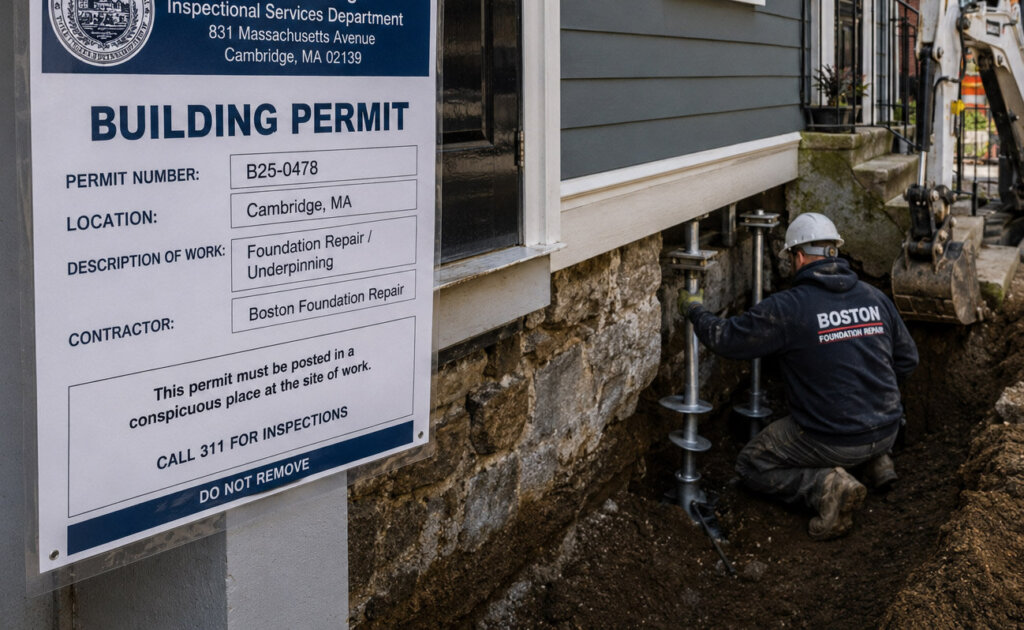
The Cambridge Inspectional Services Department (ISD) Workflow
Navigating Cambridge Inspectional Services Department Requirements
Within the City of Cambridge, structural building permits are administered through the Cambridge Inspectional Services Department (ISD), which oversees building safety, code compliance, and construction permitting throughout the city.
Whether a project involves foundation stabilization, underpinning, structural wall reinforcement, or major masonry reconstruction, ISD helps ensure that repairs comply with both the Massachusetts State Building Code and applicable local regulations before construction begins.
One of the most important requirements for homeowners to understand is that structural permits are generally obtained through qualified construction professionals—not unlicensed handymen or general laborers.
In Massachusetts, many structural projects require supervision by a licensed Construction Supervisor (CSL). A Construction Supervisor License demonstrates that the individual has met state licensing requirements and possesses knowledge of applicable building codes governing structural construction. Depending on the scope of the work, contractors may also hold additional state registrations, trade licenses, or professional certifications required for specialized foundation repair services.
Working with properly licensed professionals helps ensure that permit applications are prepared correctly, required documentation is submitted on time, and inspections proceed without unnecessary delays.
For most structural foundation projects, the permitting process typically includes:
- Initial structural evaluation of the foundation.
- Preparation of repair recommendations and supporting documentation.
- Submission of permit applications through the Cambridge ISD.
- Municipal review of proposed structural work.
- Approval before construction begins.
- Required inspections during critical phases of construction.
- Final inspection and permit close-out after the project is completed.
Professional contractors manage this process on behalf of homeowners, allowing clients to focus on the repair itself rather than navigating municipal procedures and construction regulations.
| Repair Category | Example Scope of Work | Permit Required? | PE Engineer Stamp Needed? |
| Cosmetic Maintenance | Hairline crack patching using hydraulic cement or similar cosmetic repairs. | Generally No (Ordinary Maintenance) | No |
| Structural Stabilization | Installing carbon fiber wall straps, steel I-beams, or wall reinforcement systems. | Yes | Yes (Typically Required) |
| Deep Underpinning | Installing helical piers or push piers to stabilize settling foundations. | Yes | Yes |
| Historic Masonry Restoration | Rebuilding bowing fieldstone foundation walls or structural masonry reconstruction. | Yes | Yes (Often with additional historic review when applicable) |
The Registered Professional Engineer (PE) Stamp Requirement
Why Structural Engineering Plans Matter
Major foundation repairs involve much more than installing new structural components beneath a home. Before work begins, municipalities must be confident that the proposed repair has been properly engineered to safely support the building both immediately after construction and for decades into the future.
For significant structural interventions—such as helical piers, push piers, underpinning systems, wall anchors, and other load-bearing foundation stabilization methods—the Cambridge Inspectional Services Department (ISD) may require detailed structural documentation prepared and sealed by a Massachusetts Registered Professional Engineer (PE).
An engineer’s stamp represents far more than a signature on a set of drawings. It certifies that a licensed engineering professional has evaluated the structural conditions, reviewed applicable building code requirements, and determined that the proposed repair has been designed using accepted engineering principles.
Depending on the project, engineered plans may include:
- Existing foundation conditions and structural observations.
- Estimated structural loads imposed by the building.
- Soil bearing capacity considerations.
- Pier spacing and installation depth.
- Foundation settlement analysis.
- Reinforcement details.
- Safety factors incorporated into the repair design.
- Construction specifications for contractors and inspectors.
For deep foundation systems, engineering becomes especially important because the repair must transfer the building’s weight through unstable upper soils into competent load-bearing material below. Without proper engineering calculations, an improperly designed underpinning system could fail to provide the long-term structural stability the repair is intended to achieve.
Many areas throughout Cambridge contain variable soil conditions influenced by historic fill, clay-rich deposits, groundwater fluctuations, and older construction practices. Engineering analysis helps ensure that each repair is tailored to the specific conditions affecting the individual property rather than relying on a one-size-fits-all solution.
Engineering Oversight Protects Homeowners
Although engineering requirements can initially appear to increase the complexity of a project, they ultimately serve to protect homeowners from costly structural mistakes.
Independent engineering review provides several important benefits:
- Confirms the repair addresses the actual cause of foundation movement.
- Verifies structural loads are safely transferred to stable bearing soils.
- Helps contractors install underpinning systems according to engineered specifications.
- Provides documentation supporting municipal permit approval.
- Creates a permanent engineering record for future buyers and insurance providers.
- Reduces the likelihood of recurring settlement or unnecessary repairs.
When engineering, permitting, and construction all work together, homeowners gain confidence that their foundation repair has been designed to meet recognized professional standards rather than relying solely on contractor judgment.
Historic District Approvals and Historic Preservation
Additional Requirements for Cambridge’s Historic Homes
Cambridge is widely recognized for its historic neighborhoods, many of which contain homes dating back more than a century. While these properties contribute significantly to the city’s architectural character, they may also require additional review before certain exterior structural repairs can begin.
If a home is located within a designated Historic District or Neighborhood Conservation District, visible exterior foundation work may require approval from the Cambridge Historical Commission (CHC) before certain municipal permits can be finalized.
Historic review may become necessary when repairs involve:
- Rebuilding exposed fieldstone foundation walls.
- Replacing visible historic masonry.
- Modifying exterior foundation elevations.
- Altering original stone or brick foundation materials.
- Performing structural repairs that affect historically significant architectural features.
Neighborhoods such as Old Cambridge, Harvard Square, Mid-Cambridge, and other protected historic areas often have additional preservation guidelines intended to protect the architectural integrity of the community while still allowing necessary structural improvements.
Depending on the scope of work, homeowners may need to obtain a Certificate of Appropriateness or satisfy other preservation requirements before construction proceeds.
Fortunately, experienced contractors familiar with Cambridge’s permitting process understand how municipal approvals and historic preservation requirements work together. Coordinating engineering documents, permit applications, and historic review early in the planning process helps minimize delays while ensuring repairs comply with both structural safety standards and preservation regulations.
The Financial and Legal Risks of Unpermitted Foundation Work
Why Skipping the Permit Process Can Become Expensive
Some homeowners are tempted to bypass permits in an effort to save time or reduce upfront costs. Unfortunately, unpermitted structural repairs often create far greater financial risks than the permit process itself.
Foundation work is one of the first areas scrutinized during real estate transactions because it directly affects a home’s structural stability and long-term value. Buyers, lenders, insurance companies, and home inspectors routinely examine visible foundation repairs and may compare them against publicly available municipal permit records.
When significant structural work has been completed without proper permits or engineering documentation, several complications can arise.
Potential consequences include:
- Delays during real estate transactions.
- Requests for additional engineering evaluations.
- Buyer concerns regarding structural integrity.
- Lender requirements for further inspections.
- Municipal enforcement actions if code violations are discovered.
- Additional repair costs if previously completed work must be modified to satisfy current code requirements.
In some situations, building officials may require portions of completed work to be exposed so inspectors can verify how structural repairs were performed. This can significantly increase project costs compared to completing the work correctly under permit from the beginning.
Beyond financial considerations, unpermitted structural work may also complicate future remodeling projects, insurance claims involving foundation damage, and documentation requested during refinancing or property transfers.
For most homeowners, obtaining permits and engineering approval before construction begins provides peace of mind that the repair has been independently reviewed, properly documented, and completed in accordance with applicable building regulations.
How Professional Contractors Protect Your Investment
One of the greatest advantages of hiring an experienced, licensed foundation repair contractor is that you don’t have to navigate the permitting process alone.
Professional contractors coordinate the entire regulatory process from the initial structural evaluation through final municipal inspections. Rather than expecting homeowners to interpret building codes or prepare technical engineering documents, reputable contractors manage every stage of the project while keeping clients informed throughout construction.
A comprehensive permitting process often includes:
- Coordinating structural evaluations.
- Working directly with Massachusetts Registered Professional Engineers.
- Preparing engineering drawings and supporting documentation.
- Submitting permit applications to Cambridge ISD.
- Responding to municipal plan review comments.
- Scheduling required inspections during construction.
- Coordinating final approval and permit close-out.
This organized approach helps reduce delays, minimizes paperwork for homeowners, and ensures that every stage of the repair is properly documented.
Partnering with a fully insured, licensed foundation repair contractor in Cambridge, MA guarantees that your structural stabilization meets every applicable state and municipal building code while providing the documentation needed to protect your home’s long-term value.
Scope of Licensed Structural Services
Comprehensive Foundation Repair Services for Cambridge Homeowners
Every foundation problem is different, but one thing remains consistent—major structural repairs should be performed by qualified professionals working within applicable engineering standards and building code requirements. Whether a home is experiencing settlement, basement leaks, deteriorating masonry, or cracked concrete, proper licensing, engineering oversight, and municipal permitting help ensure the repair is designed for long-term performance.
At Boston Foundation Repair, we provide comprehensive structural services for homeowners throughout Cambridge while coordinating the engineering, permitting, and inspection process whenever required. Our team works closely with licensed engineers and municipal officials to ensure each repair meets Massachusetts building standards while addressing the underlying cause of the problem.
Our licensed structural services include:
Underpinning & Piering
When foundations begin settling due to weak soils, groundwater movement, or inadequate bearing capacity, deep foundation systems provide permanent stabilization.
Our underpinning services include:
- Helical pier installation.
- Push pier foundation stabilization.
- Settlement correction.
- Foundation lifting and re-leveling.
- Load transfer to competent bearing soils below seasonal frost depth.
Every underpinning project is engineered to safely transfer structural loads while minimizing future movement.
Masonry Restoration
Many Cambridge homes feature historic fieldstone foundations, brick masonry, or older stone basement walls that require specialized restoration techniques rather than simple replacement.
Our masonry restoration services include:
- Historic fieldstone stabilization.
- Lime mortar repointing.
- Structural masonry rebuilding.
- Stone wall reinforcement.
- Crack repair for aging masonry foundations.
Because many of these homes are located within historically significant neighborhoods, repairs are completed with careful attention to both structural integrity and preservation requirements whenever applicable.
Basement Waterproofing
Keeping groundwater away from your foundation is one of the most effective ways to reduce long-term structural deterioration.
Our basement waterproofing solutions include:
- Interior perimeter drainage systems.
- Sub-slab drainage channels.
- Sump pump installation.
- Vapor barriers.
- Foundation drainage improvements.
- Moisture control systems.
Proper waterproofing helps reduce hydrostatic pressure, minimizes moisture intrusion, and protects repaired foundations from future water-related damage.
Concrete Slab Repair
Concrete floors and slabs often develop cracks as soils settle or seasonal movement affects the supporting ground beneath the structure.
Our concrete repair services include:
- Structural crack evaluation.
- Epoxy crack injection.
- Polyurethane pressure injection.
- Concrete stabilization.
- Surface restoration for spalled concrete.
- Floor crack sealing where appropriate.
Early repairs help prevent minor defects from developing into larger structural problems while extending the service life of existing concrete.
Regardless of the repair being performed, our goal remains the same: provide engineered solutions that restore structural stability while meeting every applicable state and municipal requirement.
Frequently Asked Question
Can I Repair My Own Foundation Without a Permit?
It depends on the type of repair.
Minor cosmetic work—such as filling a small, non-structural surface crack with hydraulic cement or repainting a basement wall—is generally considered ordinary maintenance and may not require a building permit. These repairs do not alter how the home carries structural loads and are typically limited to improving appearance or addressing minor surface imperfections.
However, once a repair affects the structural support system of the building, permitting requirements often change.
Projects involving helical piers, push piers, underpinning, carbon fiber wall reinforcement, steel I-beams, wall anchors, foundation wall reconstruction, or other structural stabilization methods generally require professional design, municipal review, and inspections before work begins.
Attempting major structural repairs without proper engineering or permitting can create safety concerns, complicate future property sales, and result in additional expenses if the work must later be inspected, modified, or brought into compliance with current building regulations.
If you’re unsure whether your planned repair requires a permit, consulting an experienced foundation repair contractor before beginning work is the safest course of action.
Schedule Your Code-Compliant Foundation Inspection
Foundation repairs are more than construction projects—they are long-term investments in your home’s safety, structural stability, and future value. Ensuring those repairs are properly engineered, professionally installed, and completed under the appropriate permits helps protect that investment for years to come.
Whether your home requires foundation stabilization, underpinning, masonry restoration, basement waterproofing, or concrete repair, following the proper permitting process provides confidence that the work has been independently reviewed and completed according to recognized engineering and building standards.
At Boston Foundation Repair, we manage the process from start to finish. From coordinating structural evaluations and engineering plans to obtaining permits, scheduling inspections, and completing high-quality repairs, our team works to make the experience as straightforward and stress-free as possible for homeowners throughout Cambridge.
If you’ve noticed foundation settlement, widening cracks, bowing basement walls, water intrusion, deteriorating masonry, or other signs of structural movement, don’t wait until the problem becomes more extensive—or more expensive—to repair.
Schedule a professional structural consultation with our team to receive a comprehensive evaluation and a code-compliant repair plan tailored to your home’s unique conditions. By addressing foundation problems correctly the first time, you’ll protect not only your home’s physical structure but also its long-term resale value and peace of mind.
Whether you’re planning preventative repairs or responding to active structural damage, Boston Foundation Repair is committed to delivering engineered, fully permitted solutions that meet Massachusetts building codes and help Cambridge homeowners build on a stronger foundation.