
Why Residents of Cambridge Choose Boston Foundation Repair for French Drain Installation
Water management around a foundation requires more than simply digging a trench and placing a drainage pipe. The system needs to account for the property’s grading, soil conditions, water entry points, and available discharge options. Boston Foundation Repair helps Cambridge homeowners address foundation and basement moisture concerns with drainage and waterproofing solutions designed around the conditions of each property. Our approach focuses on understanding where water is collecting and identifying practical ways to move it away from areas where it can cause problems.
Every property has different drainage requirements, especially in Cambridge, where homes range from older buildings with established foundations to newer residential construction. A French drain may be part of the solution when groundwater or recurring water accumulation needs to be collected and redirected. Boston Foundation Repair can help evaluate your drainage concerns and discuss how a French drain may work alongside other measures, such as sump pump installation, foundation crack repair, or basement waterproofing.
Boston Foundation Repair Client Reviews
Historic Home Brought Back to Life
“Bruno and his team helped restore our 110 year old house. There was an entire corner to demolish, redo the basement foundation, and then recreate exactly as it would have been originally, recovering and reusing as much of the original granite. They reconditioned our 12′ fireplace with a granite mantel and hearth. If you want a quality professional mason, have them do your job.”
-Steve S.
Boston, MA
Straightforward Service with No Surprises
“Boston Foundation Repair provided transparent and honest services throughout my foundation repair. They explained the extent of the damage, the necessary repairs, and the associated costs. There were no hidden fees.”
-Nguyen H.
Boston, MA
Cracks in Your Basement Walls? No Problem!
“We are facing cracks in our basement for the very long time. So we hired Boston Foundation Repair and their team repaired our foundation damage promptly and professionally. We are very thrilled with the outcome. Highly recommended!”
-Samantha G.
Boston, MA
Signs Your Cambridge Home May Need a French Drain
Drainage problems are not always immediately obvious. You may first notice water collecting in the yard, damp areas along basement walls, or recurring moisture after heavy rainfall. These conditions can indicate that groundwater or surface runoff is not being directed away from the property effectively.
1
Water Collecting Near Foundation Walls
Water that repeatedly pools near your home’s foundation may indicate poor drainage or improper grading. When rainwater and snowmelt collect around the exterior walls, moisture can build up in the surrounding soil and increase the likelihood of water entering through vulnerable foundation areas.
2
Recurring Basement Seepage
If water appears along the basement floor, near wall-floor joints, or through certain foundation areas after rainfall, groundwater may be contributing to the problem. An interior drainage system may help collect water that reaches the basement perimeter and direct it toward a sump pump.
3
Persistent Wet or Muddy Yard Areas
Some sections of a yard may remain wet long after the rest of the property has dried. This can happen when water has limited drainage pathways, the ground has low areas, or subsurface water collects beneath the surface. A French drain may help manage this water when the site conditions are suitable.
4
Water Entering During Heavy Rain
Basement moisture that becomes more noticeable during storms may point to drainage concerns around the foundation. If water repeatedly enters during periods of heavy rainfall, it is worth identifying whether the source is surface runoff, groundwater pressure, foundation openings, or a combination of conditions.
5
Erosion Around the Property
Uncontrolled water flow can wash away soil, disturb landscaping, and create channels along the yard. If runoff repeatedly travels toward the foundation or across the same areas, a drainage system may help redirect water and reduce ongoing erosion.
6
Damp Basement Corners and Musty Odors
Moisture that collects in basement corners or along foundation walls may contribute to musty odors and damp conditions. While a French drain may help manage water entering at the perimeter, other moisture sources may require separate waterproofing or humidity-control measures.
What Causes Drainage Problems Around Cambridge, MA Homes?
Water accumulation around a home can result from several conditions. Understanding the source is important because a French drain needs to be designed around the way water moves through and across the property.
Heavy Rainfall and Snowmelt: Cambridge experiences seasonal rainfall and winter weather that can leave the surrounding soil saturated. When the ground cannot absorb or drain water quickly enough, excess moisture may collect around foundations and low areas of the yard.
Poor Yard Grading: If the ground slopes toward the house instead of away from it, surface runoff can flow toward foundation walls. Over time, repeated water accumulation may contribute to basement seepage and damp conditions.
Clay-Rich or Compacted Soil: Some soil conditions drain more slowly than others. Compacted or less permeable soil can limit how quickly water moves through the ground, allowing moisture to remain near the foundation for longer periods.
Groundwater Pressure: When the soil surrounding a foundation becomes saturated, water pressure can build against basement walls and beneath the floor. This pressure may contribute to seepage through cracks, joints, or other vulnerable areas.
Inadequate Existing Drainage: Older properties may have drainage systems that are damaged, blocked, or no longer suitable for current site conditions. A deteriorated or poorly routed drain may allow water to continue collecting around the property.
Gutter and Downspout Problems: Clogged gutters, disconnected downspouts, and short discharge extensions can release roof runoff too close to the foundation. This can increase the amount of water entering the soil around the home.
Is a French drain necessary if water only collects in my basement during heavy rain?
Not necessarily. A French drain may be appropriate when groundwater is collecting around the foundation or entering through the basement perimeter, but other causes can produce similar symptoms. Clogged gutters, poorly positioned downspouts, negative grading, foundation cracks, and plumbing leaks should also be considered. An evaluation can help determine whether an interior drain, exterior French drain, sump pump, or another drainage improvement is the better fit for your Cambridge home.
French Drain Installation Solutions for Cambridge, MA Homes
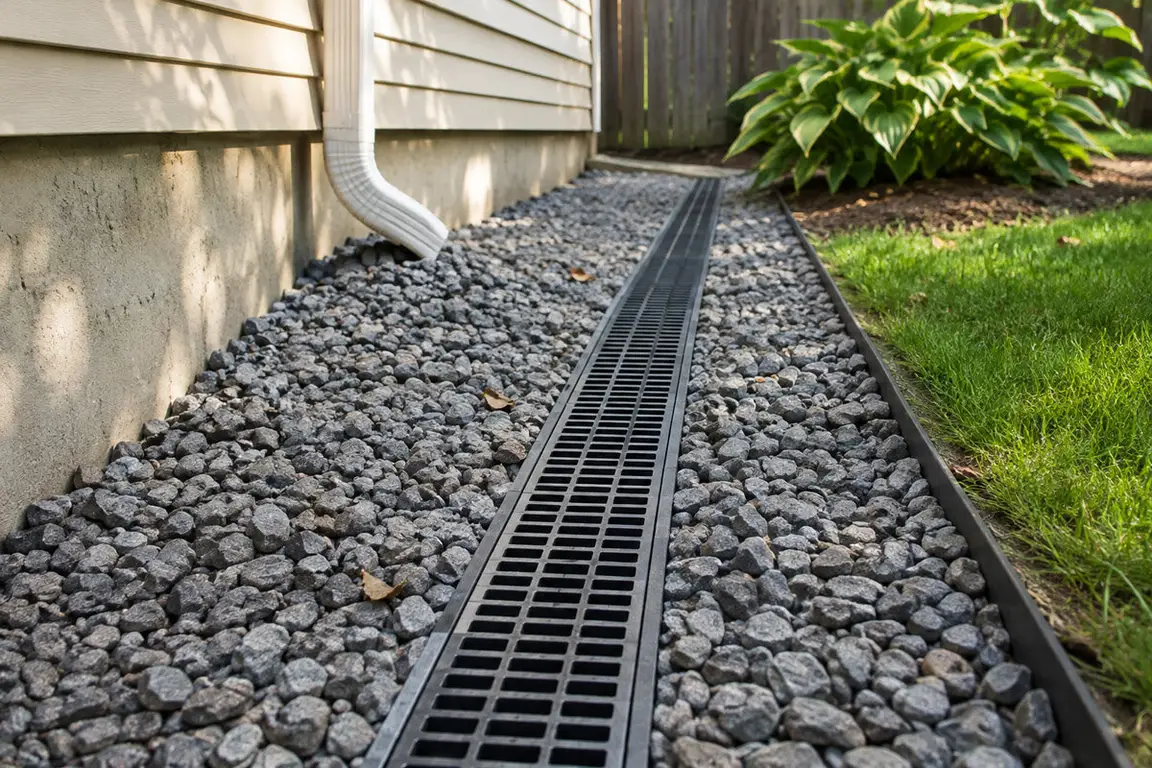
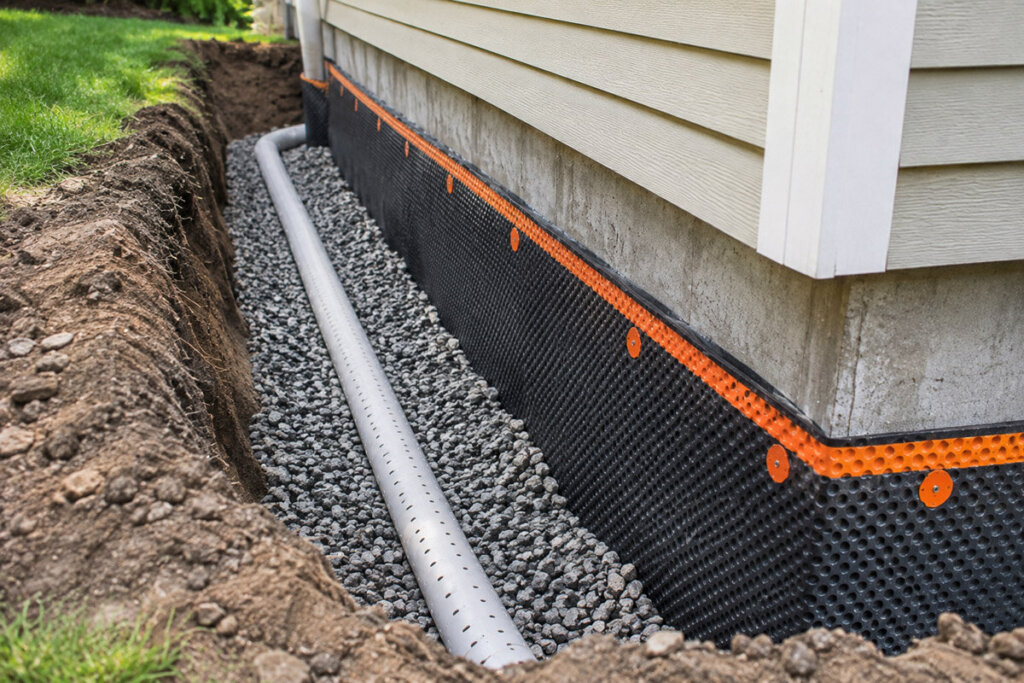
A French drain is a subsurface drainage system that collects excess water and moves it toward a designated discharge point. It typically uses a gravel-filled trench, a perforated drainage pipe, and suitable filter materials to help manage groundwater. The right installation depends on where water collects, how it enters the property, and where it can safely be discharged. For Cambridge homes, the system may be installed outside the foundation, along the interior basement perimeter, or in another suitable area of the property.
Exterior French Drain Installation
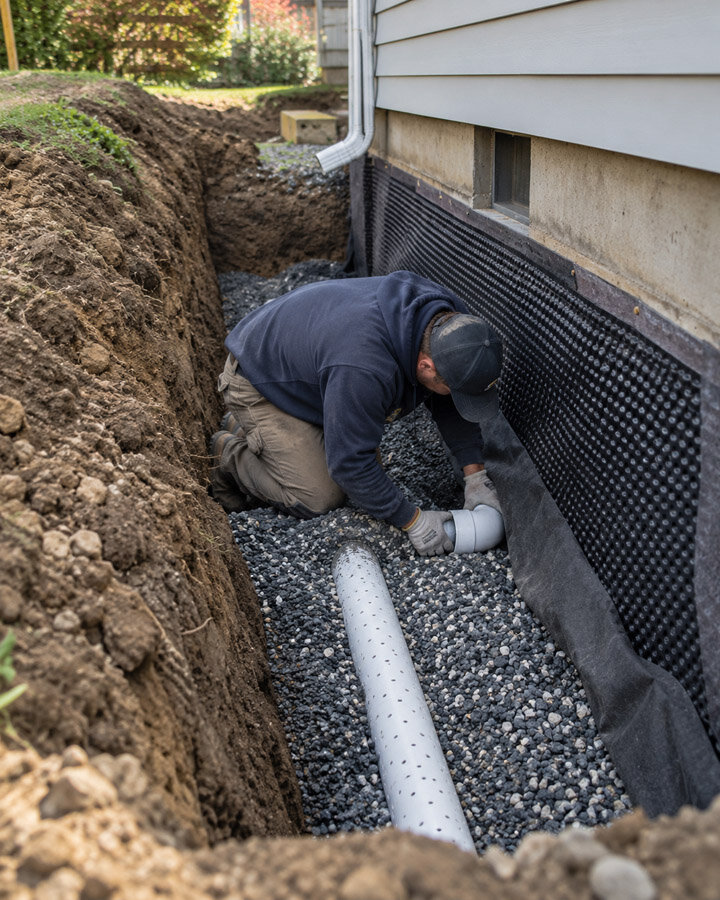
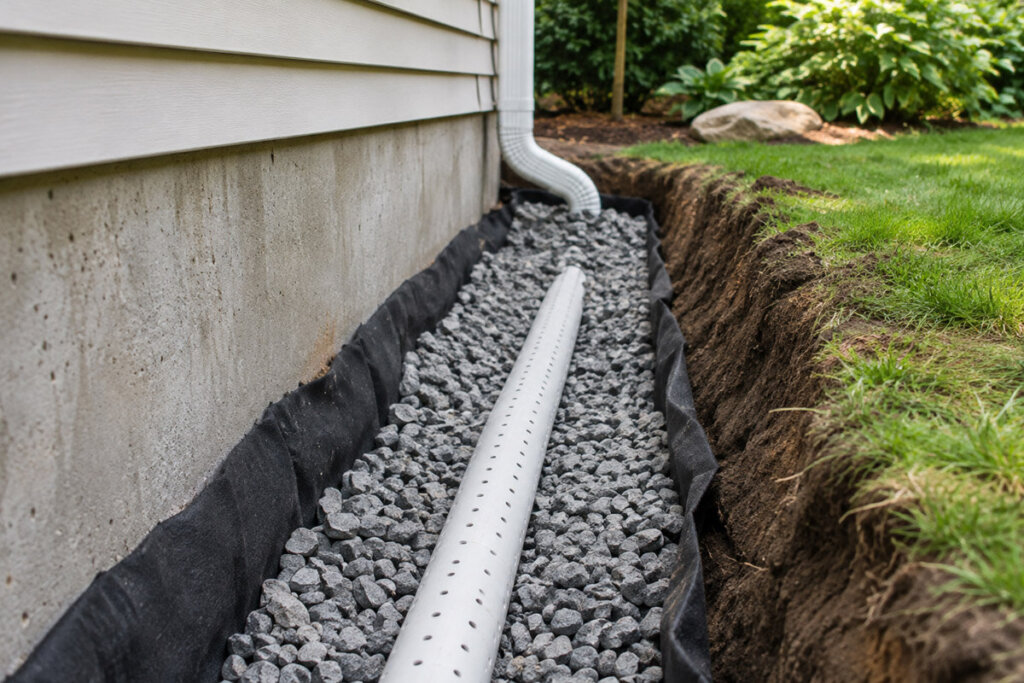
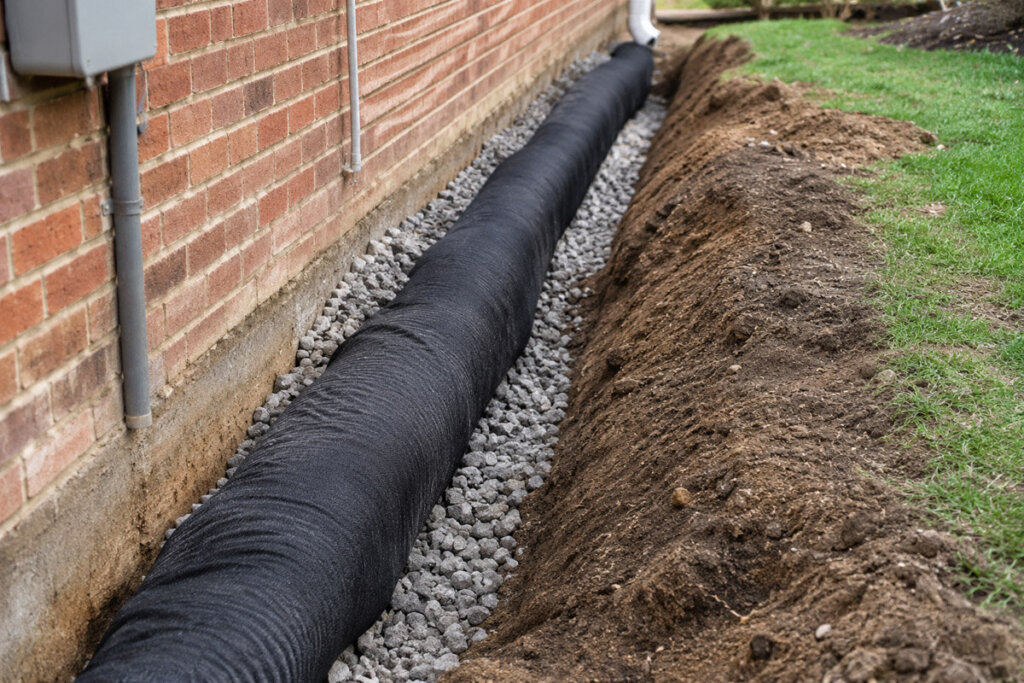
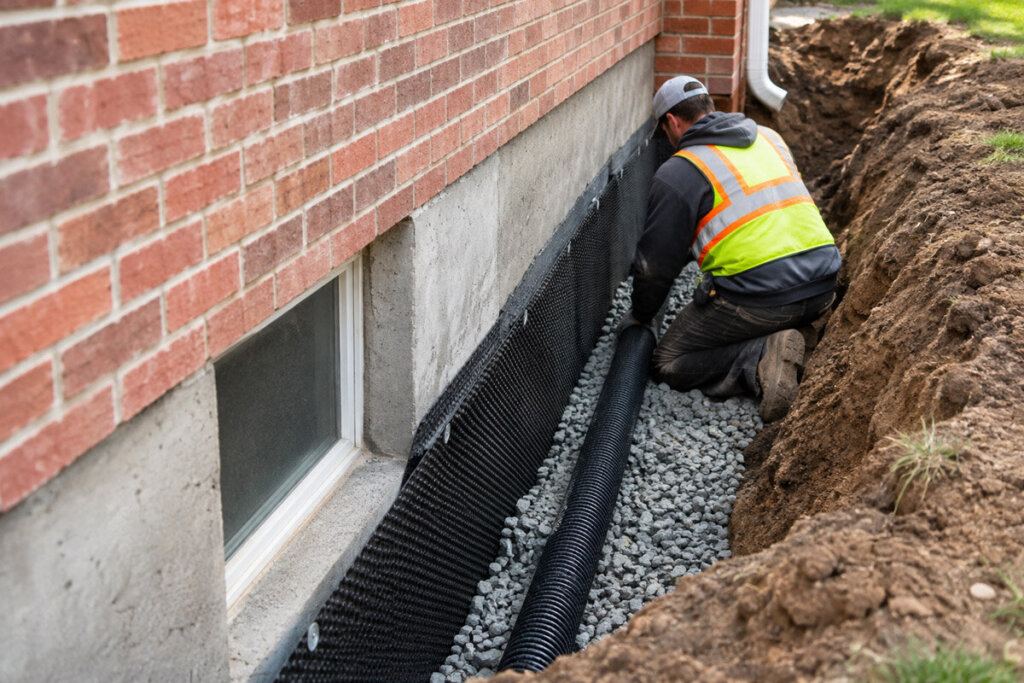
An exterior French drain is generally installed in a trench outside the home or along a specific area where groundwater collects. The trench contains drainage aggregate and a perforated pipe positioned to collect water and direct it toward an appropriate outlet. Depending on the property, the system may be installed near the foundation or in a yard area where water regularly accumulates. Proper trench placement, slope, aggregate, filter materials, and discharge planning all contribute to how the system performs.
Interior Basement French Drain Installation
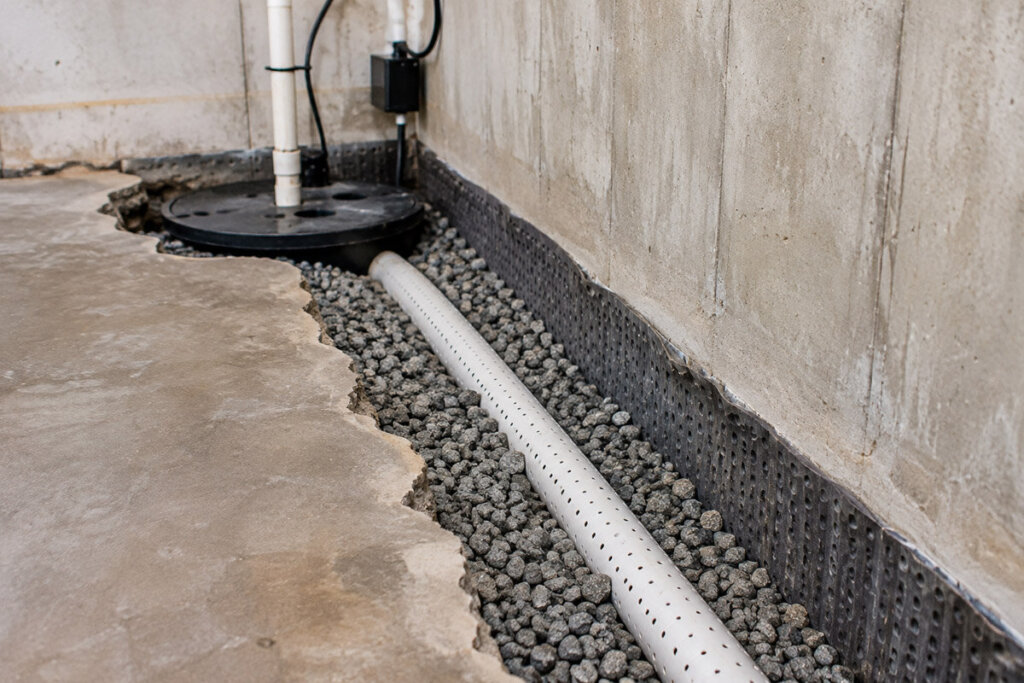
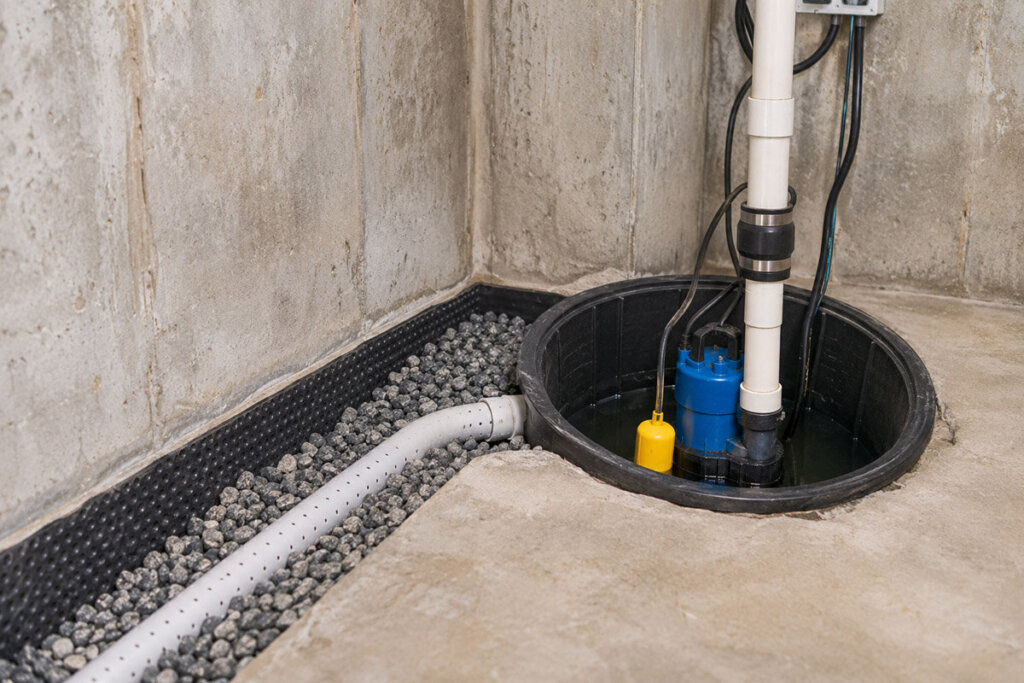
An interior perimeter drainage system is installed along the inside edge of the basement, commonly near the wall-floor joint. It is designed to collect water that reaches the basement perimeter and move it toward a sump basin or another appropriate collection point. Installation may involve opening a narrow section of the basement floor, preparing a drainage trench, placing perforated piping and aggregate, and connecting the system to a suitable sump pump. The affected floor area is then restored according to the installation plan.
Foundation Perimeter Drainage
Foundation perimeter drainage is designed to manage water around the base of the foundation. Depending on the property and construction, the system may be installed outside the foundation or incorporated into an interior basement drainage setup. The purpose is to collect water before it creates persistent accumulation around vulnerable foundation areas. A properly planned perimeter system can also work with exterior waterproofing measures and a sump pump when those components are appropriate.
French Drain and Sump Pump Integration
A French drain needs a suitable place to discharge the water it collects. On properties where gravity drainage is not practical, a sump basin and pump may be needed to move collected water to an approved discharge location. A sump pump can work alongside an interior drainage system by removing water delivered to the collection basin. The discharge route, pump capacity, electrical supply, and any backup requirements should be considered as part of the overall drainage plan.
Benefits of Professional French Drain Installation
Helps Redirect Excess Groundwater
A French drain creates a collection pathway for water moving through saturated soil. By directing that water toward an appropriate outlet, the system can help reduce accumulation around areas where drainage has been a recurring concern.
Reduces Water Buildup Near the Foundation
When installed in a suitable location, a French drain can help manage groundwater near foundation walls. This may reduce the amount of water collecting around vulnerable areas of the structure.
Helps Manage Basement Moisture
An interior perimeter drain can collect water that enters along the basement perimeter and direct it toward a sump basin. This can be an important part of a broader basement waterproofing plan.
Helps Address Persistent Yard Drainage Problems
A French drain installed in an appropriate yard location can help manage subsurface water that contributes to soggy ground and recurring wet spots. The system should be designed around the site’s grading and discharge conditions.
Schedule a French Drain Evaluation in Cambridge, MA
Recurring water accumulation around your home should not be ignored. Whether you are noticing standing water in your yard, damp basement walls, or seepage after heavy rain, identifying the source is the first step toward choosing an effective drainage solution.
Boston Foundation Repair helps Cambridge homeowners address foundation and basement water concerns through drainage and waterproofing solutions. We can evaluate the conditions affecting your property and discuss whether an exterior French drain, interior perimeter drain, sump pump system, or another improvement may be appropriate.
Frequently Asked Questions
What is a French drain, and how does it work?
A French drain is a subsurface drainage system that typically consists of a gravel-filled trench and a perforated pipe. Water enters through the surrounding drainage material, collects in the pipe, and moves toward a designated outlet. The system helps manage groundwater in areas where excess water repeatedly accumulates.
Do I need an interior or exterior French drain?
The right option depends on where the water collects and how it affects your property. An exterior French drain may be appropriate when groundwater is accumulating in the soil around the foundation or in the yard. An interior perimeter drain may be considered when water enters along the basement walls or floor edges. An evaluation can help determine which arrangement is suitable.
Can a French drain prevent basement flooding?
A French drain can help manage certain sources of groundwater and basement water intrusion, but it cannot guarantee that flooding will never occur. Its effectiveness depends on the water source, installation design, discharge location, and whether other problems are also present. A sump pump or additional waterproofing measures may be needed.
Does a French drain need a sump pump?
Not always. Some French drains can discharge water by gravity when the property has a suitable outlet and elevation. Other systems, particularly interior basement drainage systems, may require a sump basin and pump to move collected water to an appropriate discharge location.
How long does French drain installation take?
The timeline depends on the length and location of the drain, soil conditions, accessibility, excavation requirements, and whether a sump pump or other components are included. Interior basement drainage may also require concrete floor removal and restoration. A project-specific estimate can provide a more realistic schedule.
Can a French drain be installed around an older Cambridge home?
It may be possible, but older homes require careful evaluation before excavation or drainage work begins. Foundation construction, existing utilities, site access, nearby structures, and the condition of the surrounding soil can all affect the installation plan. The drainage route should be selected with the property’s existing construction in mind.
Why is my existing French drain no longer working?
A French drain may become less effective if the pipe is blocked, damaged, disconnected, or unable to discharge water properly. Sediment, debris, root intrusion, and changes in the surrounding landscape can also affect performance. The system should be inspected to identify whether cleaning, repair, or replacement is needed.
Can a French drain help with standing water in my yard?
Yes, a French drain may help when standing water is caused by subsurface groundwater or poor drainage in a particular area. However, surface runoff, low spots, and improper grading may require different improvements. The source of the water should be identified before selecting a drainage system.
How much does French drain installation cost in Cambridge, MA?
The cost depends on the drain’s length, location, excavation requirements, soil conditions, materials, and whether the project includes a sump pump or additional waterproofing work. Interior and exterior installations can also involve different preparation and restoration requirements. An on-site evaluation is the best way to determine the project scope and provide an accurate estimate.
Will a French drain solve all my foundation water problems?
No. A French drain is designed to collect and redirect water, but it does not automatically repair foundation cracks, failed waterproofing, plumbing leaks, or every source of basement moisture. Some properties need a combination of drainage improvements, crack repair, sump pump installation, and waterproofing measures to address the underlying conditions.